6 Benefits of using toner for your skin

Editor’s Note: This post was written before our faith-centered refocus, but we still stand by the message. Capital Femme is now a space where skincare meets Scripture 💛
“The UK’s sales of skin toners have increased due to the increasing percentage of consumer use. For instance, British consumers spend 1.28 billion euros on women’s facial skin care products. Within this, 25% of women use a toner in 2019, but in the year 2020, 31% of women use toner.”

Some may think using a toner is a bit outdated. As someone who started out with this product in my skincare routine as a beginner, when it was all the rave. I can tell you from experience that it does make a difference in the appearance of your skin versus without it. This is especially true if you have oily skin. Toners have come a long way. Today’s toners focus on refreshing and hydrating the skin.

Demand for toners in Europe is high and this trend continues. Many toners on the market come in liquid, mist or gel form. Look at the UK, for example, which was mentioned above. Now let’s get into the benefits of toner, and they may vary depending on the kind of toner you use.

1. Cleansing

Personally this is the biggest benefit I’ve seen from using toner. It just gets that left over dirt or residue after cleansing and this is so important if you want to keep your pores clear. This is important to my oily skin readers.

2. Improvement of skin tone and texture

My second highest benefit from personal experience is that it helps ensure a uniform skin tone across your face. It also works on any texture and makes your skin so smooth, leaves you with some glow too ✨. Some toners may cause irritation due to overuse, depending on the ingredients in your routine and skin type. For example, using more than one acidic product daily.

3. Hydrating

Please please please use toners that are alcohol- free so you can avoid drying out your skin. I know that in times gone by that using certain popular brands have left the skin feeling tight. If you can, try to use a toner that will hydrate instead of drying out the skin.

4. Helps with absorption

Since using a toner generally gets rid of any dirt, makeup, dead skin cells or residue left after cleansing. This preps your skin making it easier to absorb the other products in your routine.

5. Minimize the appearance of pores

they do this by removing any excess oil, dirt or bacteria. It also helps seal pores to protect your skin from environmental stressors.

6. Helps balance your skin’s pH

It does this by having a neutral or slightly acidic pH, which balances out your skin’s alkaline nature after cleansing.

Takeaway

Normally you would want to use a toner as the second step after cleansing in your routine. Choose toners that are vegan or natural for healthy skin in the long run. Stick with products that make you look and feel good.

Also, don’t mistake a toner for an astringent, which is alcohol based and tends to be drying. Some toners have slightly acidic properties to help make your skin smooth and cleanse your pores. I would recommend you try it if you haven’t already or if you’ve stopped using it to add it back to your routine. Peace and love ♥


References (click to view)

https://health.clevelandclinic.org/what-does-toner-do

https://www.datamintelligence.com/research-report/skin-toner-market

5 General skin care tips and the importance of skin care

Editor’s Note: This post was written before our faith-centered refocus, but we still stand by the message. Capital Femme is now a space where skincare meets Scripture 💛

In a study conducted by OnePoll 64% of Americans feel guilty for not taking their skincare seriously and 58% wished they could go back in time to take care of their skin when they were younger.

Why is skin care important?

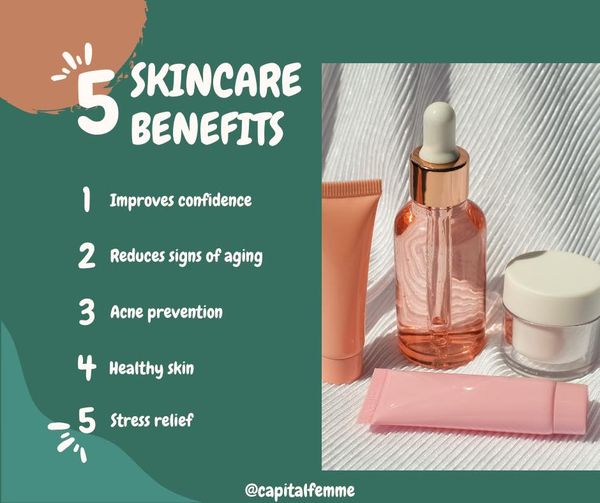
Skin care is essential because it protects, preserves and keeps your skin healthy. Maintaining a routine has both physical and emotional benefits like the ones below.

Capital Femme: 5 reasons why skincare is important. List of skincare benefits.

No matter where you are in your journey, I’ve put together a few general skincare tips that will help you keep your skin looking its best.

1. Keep your hands off your face as much as possible

Only clean materials, items and hands should touch your face.

2. Try to reduce popping pimples or acne

This can help reduce acne scarring and dark spots (hyperpigmentation) instead try gently exfoliating, applying a clay mask, or some retinol. A study found that 43% of people regret picking at their acne.

3. Cleanse and moisturize daily:

Your skin will thank you for this over time, helps to reduce acne, early signs of aging and improve your skin’s texture by making it smoother. Take note that using only water will not cleanse your skin properly.

4. Use non-comedogenic products:

As you may know, these are products that will not clog your pores. Sun protection is also important.

5. Stay hydrated

This helps your skin be firmer and plump. It can also benefit you to have a healthier diet, reducing trans fat and processed food consumption, in exchange for whole foods like nuts, fruits & vegetables.

You can prevent things like premature aging, sun spots and even cancer.

I know sometimes life can get busy, start small, even if it’s for just 10 minutes. These tips apply no matter what your skin type is, your age, gender and whether you’re just starting out or have an advanced routine. You can implement these tips one at a time and you will see a difference.

Reference (click to view)

https://nypost.com/2020/08/04/more-than-90-percent-of-people-polled-say-their-skin-is-healthier-after-spending-significantly-more-time-at-home

Ingredients that are good for oily, acne prone skin

Editor’s Note: This post has been updated as of July 2025. Capital Femme is now a space where skincare meets Scripture 💛

Christian faith aligned ingredients that help oily acne prone skin. Capital Femme

As a busy woman of faith, you’re juggling so much. You deserve skincare that works and aligns with God’s Word (1 Corinthians 6:19-20). You’re not alone if your oily, acne-prone skin feels like a battle  (about 85% of teens and adults face acne at some point).

In this post, you’ll discover top skincare ingredients, like niacinamide, aloe vera, and salicylic acid that help control oil, calm inflammation, and honor the temple God gave you. All without overwhelming your routine.

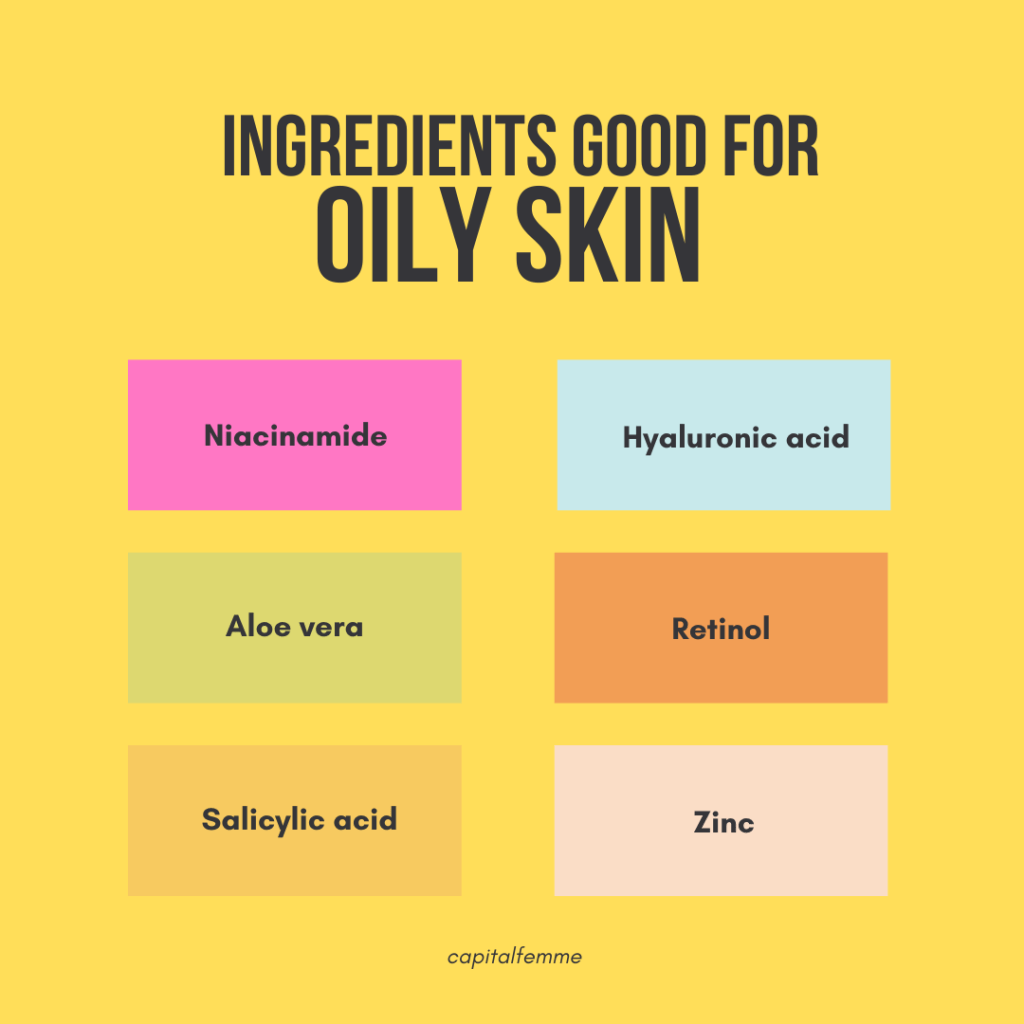
These are some of the top picks of ingredients that will help address issues of oily acne-prone skin type like controlling oil production, unclogging pores and reducing the appearance of large pores. They will also help to keep your skin moisturised. We know that having acne can mess with your self-esteem and confidence so let’s get into this list of helpful ingredients.

Niacinamide, also called vitamin B3 absorbs sebum (oil) and helps with the production of collagen that keeps the skin firm and improves skin texture. It also helps the skin grow a ceramide barrier which helps attract and lock in moisture. It treats acne, hyperpigmentation and protects your skin against sun damage. Niacinamide can also be found in meat, fish, poultry, green vegetables, whole grains and mushrooms.

Now, let’s look at Hyaluronic acid. Despite common misconceptions, oily skin needs to be moisturized. Otherwise, you’ll look like an overoiled mess, which can leave negative impressions on your clients.

Hyaluronic acid is a moisturizing ingredient commonly found in creams, lotions, serums, moisturizers, etc. It functions as a humectant, continuing to draw in and hold moisture to the skin even after it’s applied. It also hydrates the skin by binding water to the skin’s cells. So, less touch-ups during the day once you’ve got this ingredient in the mix.

Did you know hyaluronic acid is found in the body in connective tissues and the eyes? It decreases as we age. Some foods that aid in natural hyaluronic acid production include bone broth, leafy greens and citrus fruits, according to Chix Nutrix.

Next up is Aloe (also known as Aloe Vera) which is from a succulent fleshy plant. Aloe vera has soothing and cooling properties. It’s made up of 98% water. It can soothe irritated skin (such as sunburns), helps reduce inflammation, keeps skin hydrated and lighten blemishes all while fighting against acne. It also speeds up wound healing and limits scarring.

By Capital Femme. Ingredients good for oily skincare. Christian Faith inspired.

Retinol, also called vitamin A, helps reduce oil production by tightening the pores. Retinol cream is a good treatment for whiteheads and blackheads. It’s also known to smooth fine lines and wrinkles. Here’s one retinol cream that’s gentle, skin-loving and effective. To get a full breakdown of this product, check out this review.

Also, it’s recommended to use retinol at night as it can make your skin more sensitive to sunlight. Please consult your doctor before using if you are pregnant. And of course, vitamin A can be found naturally in foods like beef liver, carrots, canteloupe and sweet potato.

Remember to always moisturize and wear SPF.

Salicylic acid is non-comedogenic meaning it won’t clog pores instead it gets into the pores keeping them clear to reduce breakouts. It can be found naturally in the bark of willow trees. Be careful not to overuse this ingredient, especially if pregnant, or using retinol and other exfoliants.

Lastly, Zinc has anti-inflammatory properties. It helps to get rid of acne-causing bacteria from the skin and reduces oil production when applied to the skin. Zinc can be found in foods like poultry, beans, whole grains and dairy products.

Takeaway

All the ingredients mentioned above are non-toxic when used in moderation. All the ingredients above can be found naturally. The key is choosing one or two at a time, especially if your skin is sensitive, and following up with SPF and moisturizer to prevent irritation. Consult your doctor if you’re pregnant before using retinol and salicylic acid. Otherwise, you can look out for these ingredients in your skincare products and let us know what other ingredients you’ve tried and how they’ve worked for you.


This post contains affiliate links. If you make a purchase through them, as an Amazon associate I may earn a small commission—at no extra cost to you. Thank you for supporting this blog!

References (click to view)

https://www.yalemedicine.org/conditions/acne

https://www.news-medical.net/health/Health-Benefits-and-Dangers-of-Aloe-Vera.aspx

https://curology.com/blog/foods-high-in-retinol-these-may-help-your-skin/

https://www.healthline.com/health/beauty-skin-care/zinc-for-acne#diet

https://chicnutrix.com/blogs/world-of-chic/foods-rich-in-hyaluronic-acid#:~:text=Hyaluronic%20acid%20is%20a%20naturally%20occurring%20compound%20produced%20by%20the,hyaluronic%20acid%20in%20the%20body.