
The wonders of Aloe Vera for your skin and overall health

Editor’s Note: This post was written before our faith-centered refocus, but we still stand by the message. Capital Femme is now a space where skincare meets Scripture 💛

Picture of hummingbird on Aloe Vera Plant benefits for skincare and overall health. By Capital Femme

Aloe Vera, in Jamaica it is also known as Sinkle bible. It is usually grown in tropical, semi- tropical zones but can be found all over the world. It thrives in warm, dry climates. This plant has many purposes, especially for skincare. Let’s look at a few of them.

Skincare benefits

It has antibacterial and antioxidant properties that can be used to treat numerous skin conditions. This plant has healing powers and can help treat cuts, scrapes minor burns including sunburn and minor wounds.

Due to its anti-bacterial properties, it helps manage excessive acne. It is also anti-inflammatory and soothes redness, flare-ups, irritation and promotes healing of acne scars. 

The antioxidants found in Aloe help fight free radicals. Free radicals are unstable atoms that can damage cells, causing illness and aging. 

Some of its additional benefits are moisturizing oily and dry skin, soothing inflammation, frostbite, cold sores, eczema and psoriasis.

For oily skin, aloe vera works because it has high water content which hydrates the skin and is a non-greasy moisturizer. Aloe vera can also be used as a toner as it is gentle enough that it won’t dry out your skin while helping to control oil production.

This plant is also known to help with wrinkles by increasing collagen production and improving skin elasticity.

The most potent form of the plant is the gel, you can use Over-the-counter aloe gel or you can use it directly from the plant.

Digestive benefits

When consumed aloe vera can be used to reduce:

Dental plaque – It can be used as an alternative to chemical mouthwash and can provide relief from bleeding or swollen gums.

Constipation – laxatives within the plant may help relieve constipation.

Blood sugar levels – consuming aloe vera can help persons with prediabetes and type 2 diabetes.

Aloe vera is a rich source of:

  • Vitamin A
  • Vitamin E
  • Vitamin C
  • Beta-carotene
  • Calcium
  • Folic Acid
  • Magnesium

Precautions

It may soothe sunburn but is not a replacement for sunscreen. So please use your sun protection. You can be sensitive to aloe vera and should try a small patch test on somewhere like your forearm. If you experience any adverse reaction stop using it. Try not to use this plant too frequently.

Finally

Aloe vera is a succulent plant packed with many benefits including skin care, digestion and nutrition. There are studies and data available that back these claims. However, you should be cautious of how much aloe you consume. This natural resource is truly extraordinary and with care can be great for your health.

 

Common Skincare Misconceptions

Editor’s Note: This post was written before our faith-centered refocus, but we still stand by the message. Capital Femme is now a space where skincare meets Scripture 💛

common skincare misconceptions/ myths along with the correct facts

When taking care of yourself, part of that usually includes indulging in your skincare. To do so you have to learn about the skin. So I’ve put together a little list of common skincare misconceptions out there that I’ve heard of and encountered on my journey as well. The corresponding facts included are also worth taking note of. They apply no matter what stage of your skincare you are in.

1. Oily skin doesn’t need to be moisturized.

The obvious choice may be to skip moisturizing if your skin feels greasy but this can actually lead to your skin producing more oil due to dehydration. Using the right moisturizer can actually help control oil production without feeling heavy on the skin.

2. You should exfoliate everyday.

Over exfoliating your skin can cause a breakdown in your natural barrier and cause the skin to become irritated.

3. Pores can open and close.

Pores can appear larger when clogged by dirt, debris and oil. Clean pores will look smaller and prevent them from stretching.

4. Sunscreen is for certain climates and persons with certain skin issues.

Sunscreen should be applied no matter the skin tone or time of year. Sunscreen is for everyone and should be part of any basic skincare routine. Up to 80% of ultraviolet rays can penetrate through clouds on cloudy days.

UV rays can also reflect off of surfaces and cause sunburn. Sunscreen prevents premature aging (wrinkles, fine lines) and lowers your risk of developing skin cancer. It’s recommended to use broad spectrum sunscreen with at least SPF 30 to protect the skin from UVA and UVB rays.

5. Dark circles under the eyes are from a lack of sleep.

A lack of sleep can worsen dark circles but is not the only cause. Other factors such as genetics, aging,  pigmentation, dryness etc. can play a role. This can be treated based on what is causing the dark circles. Getting a vitamin C serum may be a viable option for you.

Finally

I hope this helped spread some light on some misconceptions about skincare and help you better understand your skin.  Share it with a friend if you found this helpful. 


Ingredients that are good for oily, acne prone skin

Editor’s Note: This post has been updated as of July 2025. Capital Femme is now a space where skincare meets Scripture 💛

Christian faith aligned ingredients that help oily acne prone skin. Capital Femme

As a busy woman of faith, you’re juggling so much. You deserve skincare that works and aligns with God’s Word (1 Corinthians 6:19-20). You’re not alone if your oily, acne-prone skin feels like a battle  (about 85% of teens and adults face acne at some point).

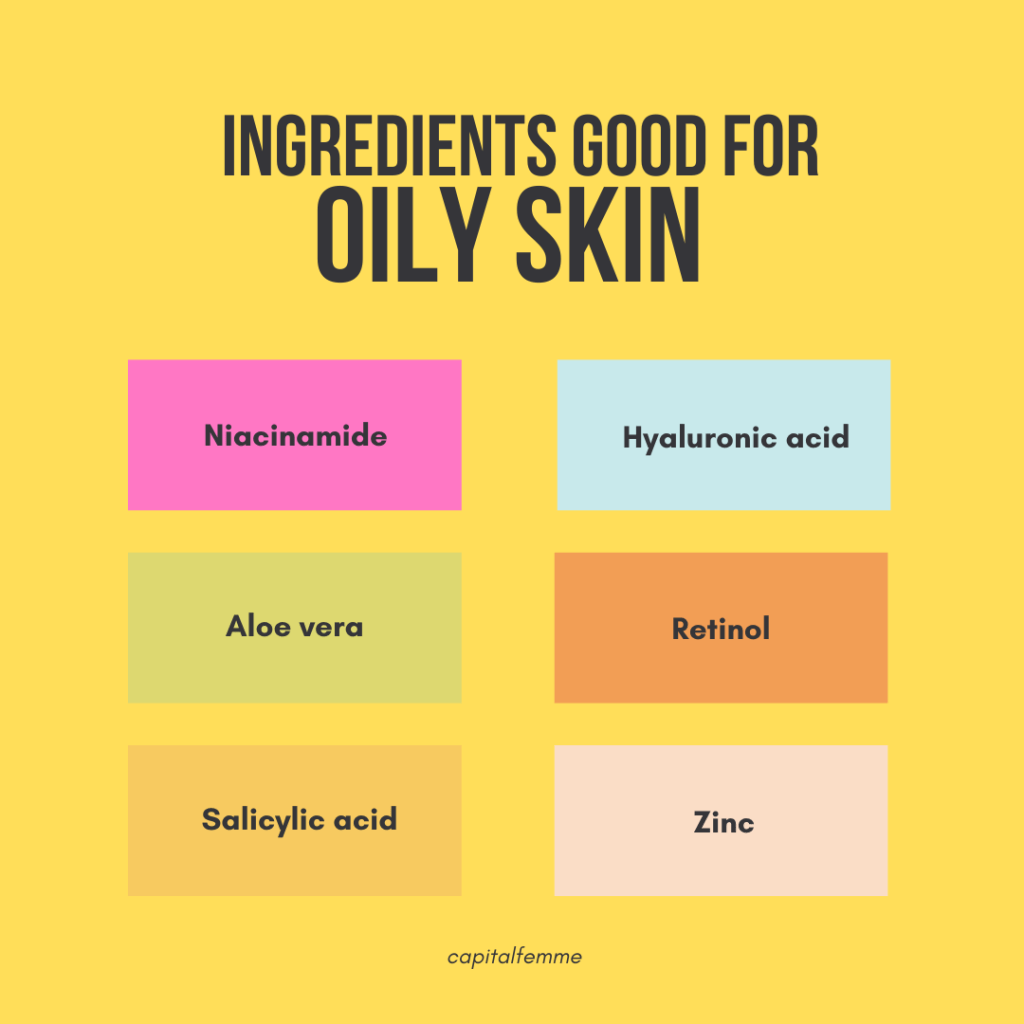
In this post, you’ll discover top skincare ingredients, like niacinamide, aloe vera, and salicylic acid that help control oil, calm inflammation, and honor the temple God gave you. All without overwhelming your routine.

These are some of the top picks of ingredients that will help address issues of oily acne-prone skin type like controlling oil production, unclogging pores and reducing the appearance of large pores. They will also help to keep your skin moisturised. We know that having acne can mess with your self-esteem and confidence so let’s get into this list of helpful ingredients.

Niacinamide, also called vitamin B3 absorbs sebum (oil) and helps with the production of collagen that keeps the skin firm and improves skin texture. It also helps the skin grow a ceramide barrier which helps attract and lock in moisture. It treats acne, hyperpigmentation and protects your skin against sun damage. Niacinamide can also be found in meat, fish, poultry, green vegetables, whole grains and mushrooms.

Now, let’s look at Hyaluronic acid. Despite common misconceptions, oily skin needs to be moisturized. Otherwise, you’ll look like an overoiled mess, which can leave negative impressions on your clients.

Hyaluronic acid is a moisturizing ingredient commonly found in creams, lotions, serums, moisturizers, etc. It functions as a humectant, continuing to draw in and hold moisture to the skin even after it’s applied. It also hydrates the skin by binding water to the skin’s cells. So, less touch-ups during the day once you’ve got this ingredient in the mix.

Did you know hyaluronic acid is found in the body in connective tissues and the eyes? It decreases as we age. Some foods that aid in natural hyaluronic acid production include bone broth, leafy greens and citrus fruits, according to Chix Nutrix.

Next up is Aloe (also known as Aloe Vera) which is from a succulent fleshy plant. Aloe vera has soothing and cooling properties. It’s made up of 98% water. It can soothe irritated skin (such as sunburns), helps reduce inflammation, keeps skin hydrated and lighten blemishes all while fighting against acne. It also speeds up wound healing and limits scarring.

By Capital Femme. Ingredients good for oily skincare. Christian Faith inspired.

Retinol, also called vitamin A, helps reduce oil production by tightening the pores. Retinol cream is a good treatment for whiteheads and blackheads. It’s also known to smooth fine lines and wrinkles. Here’s one retinol cream that’s gentle, skin-loving and effective. To get a full breakdown of this product, check out this review.

Also, it’s recommended to use retinol at night as it can make your skin more sensitive to sunlight. Please consult your doctor before using if you are pregnant. And of course, vitamin A can be found naturally in foods like beef liver, carrots, canteloupe and sweet potato.

Remember to always moisturize and wear SPF.

Salicylic acid is non-comedogenic meaning it won’t clog pores instead it gets into the pores keeping them clear to reduce breakouts. It can be found naturally in the bark of willow trees. Be careful not to overuse this ingredient, especially if pregnant, or using retinol and other exfoliants.

Lastly, Zinc has anti-inflammatory properties. It helps to get rid of acne-causing bacteria from the skin and reduces oil production when applied to the skin. Zinc can be found in foods like poultry, beans, whole grains and dairy products.

Takeaway

All the ingredients mentioned above are non-toxic when used in moderation. All the ingredients above can be found naturally. The key is choosing one or two at a time, especially if your skin is sensitive, and following up with SPF and moisturizer to prevent irritation. Consult your doctor if you’re pregnant before using retinol and salicylic acid. Otherwise, you can look out for these ingredients in your skincare products and let us know what other ingredients you’ve tried and how they’ve worked for you.


This post contains affiliate links. If you make a purchase through them, as an Amazon associate I may earn a small commission—at no extra cost to you. Thank you for supporting this blog!

References (click to view)

https://www.yalemedicine.org/conditions/acne

https://www.news-medical.net/health/Health-Benefits-and-Dangers-of-Aloe-Vera.aspx

https://curology.com/blog/foods-high-in-retinol-these-may-help-your-skin/

https://www.healthline.com/health/beauty-skin-care/zinc-for-acne#diet

https://chicnutrix.com/blogs/world-of-chic/foods-rich-in-hyaluronic-acid#:~:text=Hyaluronic%20acid%20is%20a%20naturally%20occurring%20compound%20produced%20by%20the,hyaluronic%20acid%20in%20the%20body.