Sunscreen is an important part of any skincare routine. It’s for all skin. This month, May is skin cancer awareness month. It’s recommended by experts that you should be using a broad spectrum formula, which protects you from both UVA and UVB rays with at least SPF 30. Did you know that on cloudy days up to 80% or more of UV (Ultra Violet) rays penetrate clouds? “An estimated 80 percent of skin aging is caused by the sun” – Skin Cancer Foundation.
Here are 5 Uses of Sunscreen:
It lowers your risk of skin cancer.
Prevents premature aging.
Enhances skin health.
Prevents sunburn.
Reduces dark spots (hyperpigmentation).
Tips for choosing a sunscreen
Choose a sunscreen that is reef- safe
Opt for a mineral sunscreen
Go for a sunscreen that won’t give you a white cast especially if you have darker skin. One you can try is Coppertone Every Tone.
These sunscreens usually avoid harmful ingredients such as oxybenzone, octinoxate, Para-aminobenzoic acid (PABA) and pthalates. Mineral-based sunscreens are normally based in the ingredients titanium oxide and mineral oxide.
“The UK’s sales of skin toners have increased due to the increasing percentage of consumer use. For instance, British consumers spend 1.28 billion euros on women’s facial skin care products. Within this, 25% of women use a toner in 2019, but in the year 2020, 31% of women use toner.”
Some may think using a toner is a bit outdated. As someone who started out with this product in my skincare routine as a beginner, when it was all the rave. I can tell you from experience that it does make a difference in the appearance of your skin versus without it. This is especially true if you have oily skin. Toners have come a long way. Today’s toners focus on refreshing and hydrating the skin.
Demand for toners in Europe is high and this trend continues. Many toners on the market come in liquid, mist or gel form. Look at the UK, for example, which was mentioned above. Now let’s get into the benefits of toner, and they may vary depending on the kind of toner you use.
1. Cleansing
Personally this is the biggest benefit I’ve seen from using toner. It just gets that left over dirt or residue after cleansing and this is so important if you want to keep your pores clear. This is important to my oily skin readers.
2. Improvement of skin tone and texture
My second highest benefit from personal experience is that it helps ensure a uniform skin tone across your face. It also works on any texture and makes your skin so smooth, leaves you with some glow too ✨. Some toners may cause irritation due to overuse, depending on the ingredients in your routine and skin type. For example, using more than one acidic product daily.
3. Hydrating
Please please please use toners that are alcohol- free so you can avoid drying out your skin. I know that in times gone by that using certain popular brands have left the skin feeling tight. If you can, try to use a toner that will hydrate instead of drying out the skin.
4. Helps with absorption
Since using a toner generally gets rid of any dirt, makeup, dead skin cells or residue left after cleansing. This preps your skin making it easier to absorb the other products in your routine.
5. Minimize the appearance of pores
they do this by removing any excess oil, dirt or bacteria. It also helps seal pores to protect your skin from environmental stressors.
6. Helps balance your skin’s pH
It does this by having a neutral or slightly acidic pH, which balances out your skin’s alkaline nature after cleansing.
Takeaway
Normally you would want to use a toner as the second step after cleansing in your routine. Choose toners that are vegan or natural for healthy skin in the long run. Stick with products that make you look and feel good.
Also, don’t mistake a toner for an astringent, which is alcohol based and tends to be drying. Some toners have slightly acidic properties to help make your skin smooth and cleanse your pores. I would recommend you try it if you haven’t already or if you’ve stopped using it to add it back to your routine. Peace and love ♥
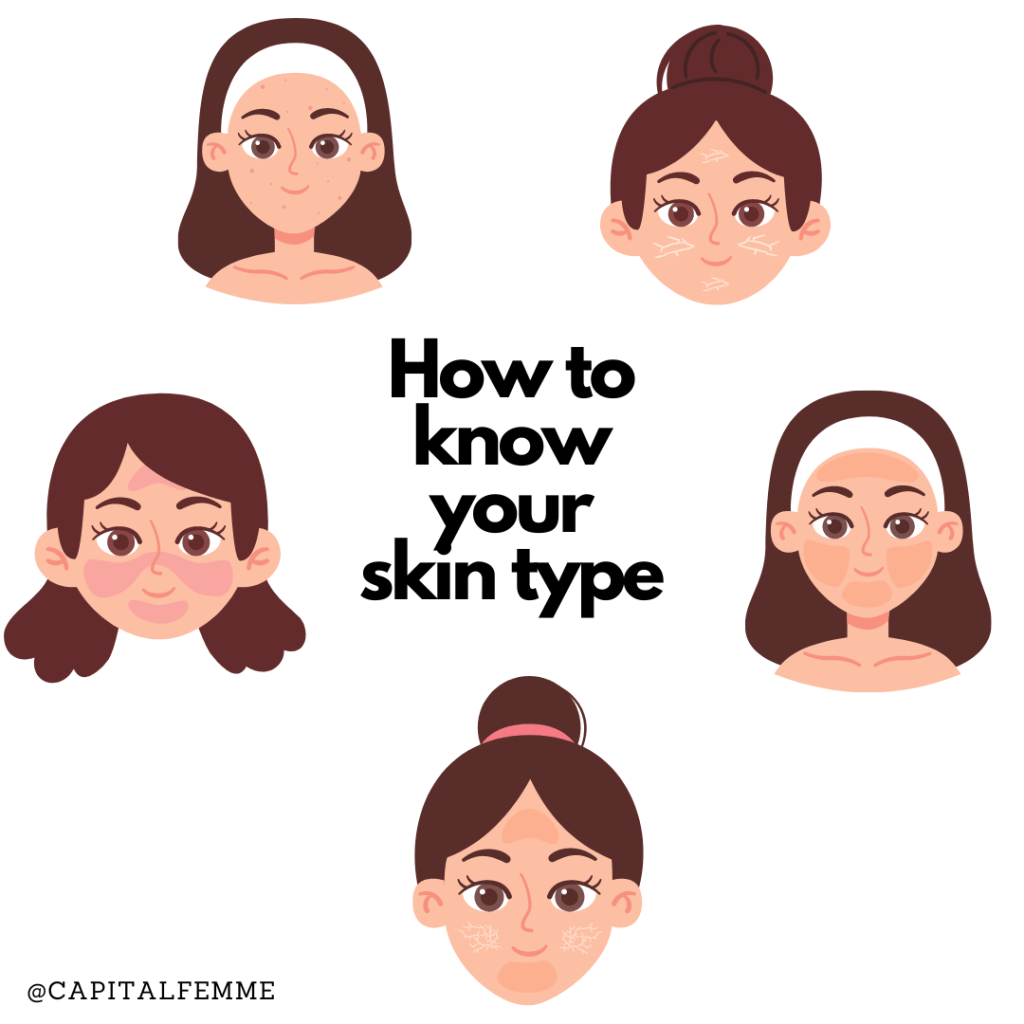
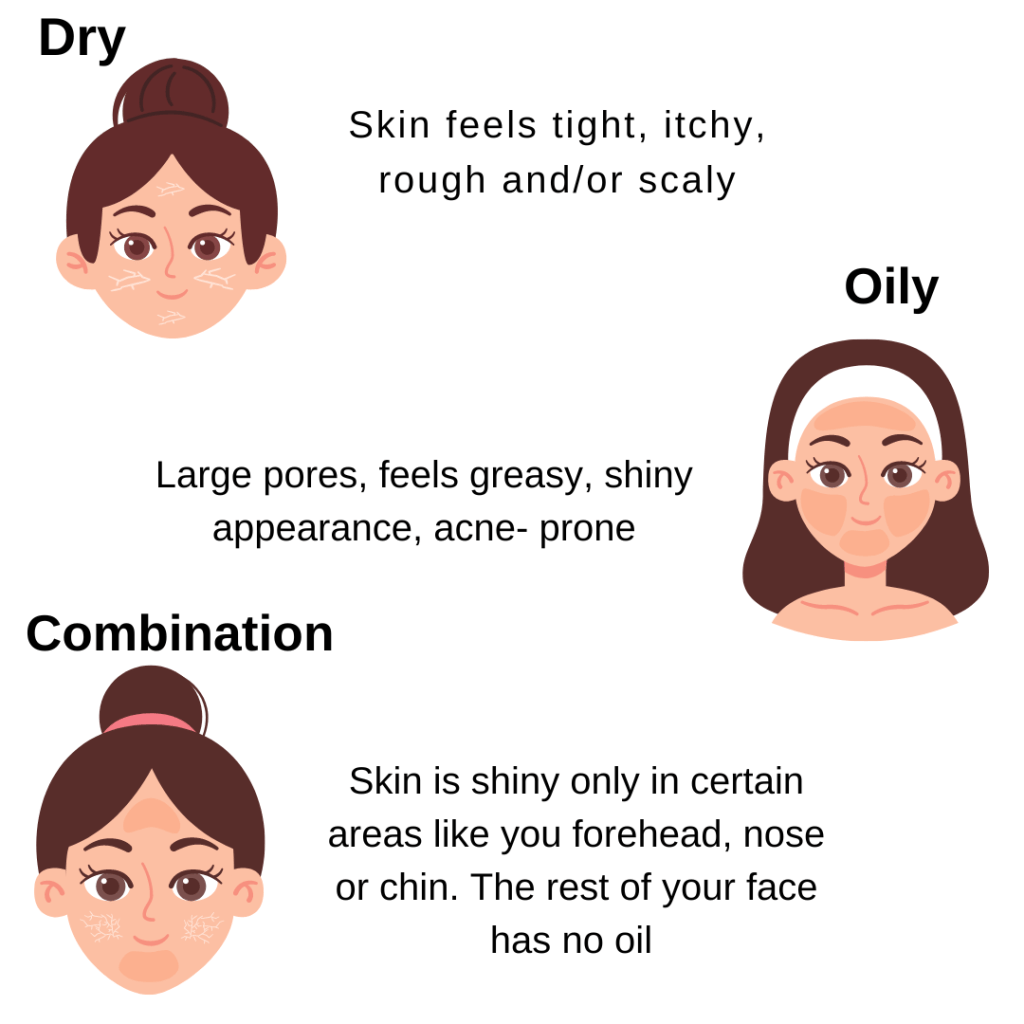
Have you ever bought a product that has worked for a friend but not for you? Are you choosing products that are right for your skin type? There are five main skin types, they are normal, oily, dry, combination and sensitive. Your skin type is largely dependent on your genetics and hormones.
Knowing your skin type is important because it gives you a better understanding of what your skin needs. Instead of just getting a product because you saw someone else using it or simply because it has great reviews, just to be disappointed that it doesn’t work for you. You should know what skin type the product was made for. So knowing your skin type really helps you choose the right products for it. The characteristics that define the five main skin types are:
3 Easy ways to tell are:
First, is the blotting paper method. Get some quality blotting paper and pat (not swipe) each area of your bare face. For example, you could start with your cheeks. Check what comes off of each area by holding up the paper to the light to see if there is any oil. If you see oil for all areas you most likely have oily skin versus no oil then you have dry skin. If you notice only certain areas, for example, your T-zone (forehead, chin and nose) only then you have combination skin.
Second is the 30 minute test. Wash your face with a mild/gentle cleanser. Pat dry, do not apply anything (products) to your face. Then wait thirty minutes. Based on what you have observed you can then determine your skin type.
Thirdly, another option is to visit a dermatologist to find out what your skin type is, and which products will work best for you.
When taking care of yourself, part of that usually includes indulging in your skincare. To do so you have to learn about the skin. So I’ve put together a little list of common skincare misconceptions out there that I’ve heard of and encountered on my journey as well. The corresponding facts included are also worth taking note of. They apply no matter what stage of your skincare you are in.
1. Oily skin doesn’t need to be moisturized.
The obvious choice may be to skip moisturizing if your skin feels greasy but this can actually lead to your skin producing more oil due to dehydration. Using the right moisturizer can actually help control oil production without feeling heavy on the skin.
2. You should exfoliate everyday.
Over exfoliating your skin can cause a breakdown in your natural barrier and cause the skin to become irritated.
3. Pores can open and close.
Pores can appear larger when clogged by dirt, debris and oil. Clean pores will look smaller and prevent them from stretching.
4. Sunscreen is for certain climates and persons with certain skin issues.
Sunscreen should be applied no matter the skin tone or time of year. Sunscreen is for everyone and should be part of any basic skincare routine. Up to 80% of ultraviolet rays can penetrate through clouds on cloudy days.
UV rays can also reflect off of surfaces and cause sunburn. Sunscreen prevents premature aging (wrinkles, fine lines) and lowers your risk of developing skin cancer. It’s recommended to use broad spectrum sunscreen with at least SPF 30 to protect the skin from UVA and UVB rays.
5. Dark circles under the eyes are from a lack of sleep.
A lack of sleep can worsen dark circles but is not the only cause. Other factors such as genetics, aging, pigmentation, dryness etc. can play a role. This can be treated based on what is causing the dark circles. Getting a vitamin C serum may be a viable option for you.
Finally
I hope this helped spread some light on some misconceptions about skincare and help you better understand your skin. Share it with a friend if you found this helpful.
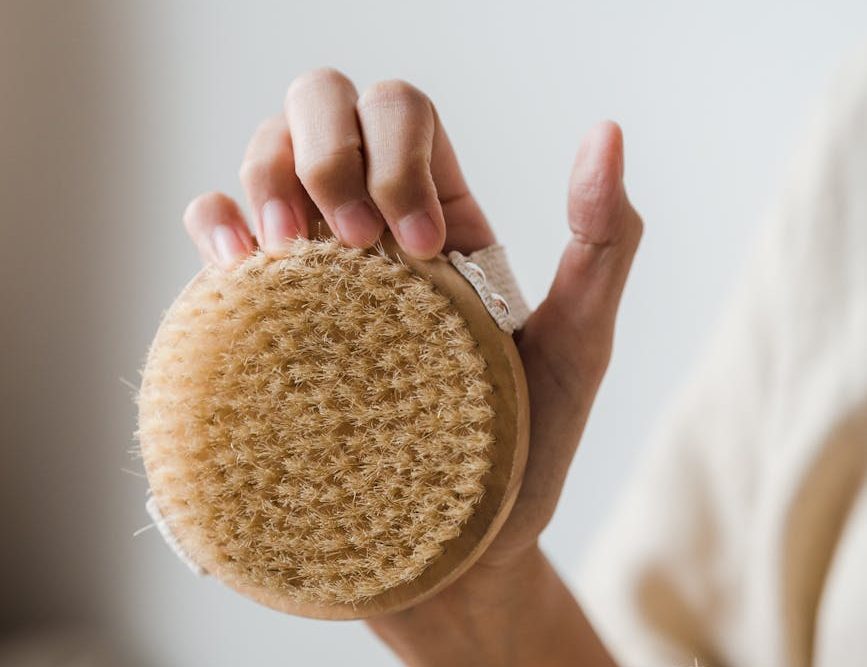
Exfoliating is the act of removing dead skin cells from the surface layer of the skin, often with the use of a substance. There are two types of exfoliation, physical and chemical. Physical exfoliation can be done with a grainy substance, product or tool such as a scrub or brush while chemical exfoliation involves the usage of enzymes and acids.
How often should I exfoliate?
It’s recommended by experts that you should exfoliate your skin at least twice a week. The frequency however can vary depending on things like skin type or the method of exfoliation, for example, chemical, sensitivity etc.
Health benefits of exfoliating
The are numerous positive health benefits resulting from exfoliating such as:
Evens out skin tone.
Unclog pores. Getting rid of blackheads and whiteheads allows pores to look smaller.
Prevents acne.
Boosts circulation and lymphatic drainage. This gives the skin a glow and promotes internal cleansing respectively.
Boosts collagen production. Long-term exfoliation reduces wrinkles and fine lines, giving the skin a more youthful look.
Helps other skin care products to penetrate the skin. You might be wondering why you aren’t noticing any progress from a product you’ve used before or has great reviews, this could be due to a build up of dead skin.
Prevents ingrown hairs. Ingrown hairs happen when the hair follicle gets clogged by dead skin cells and debris.
How to exfoliate
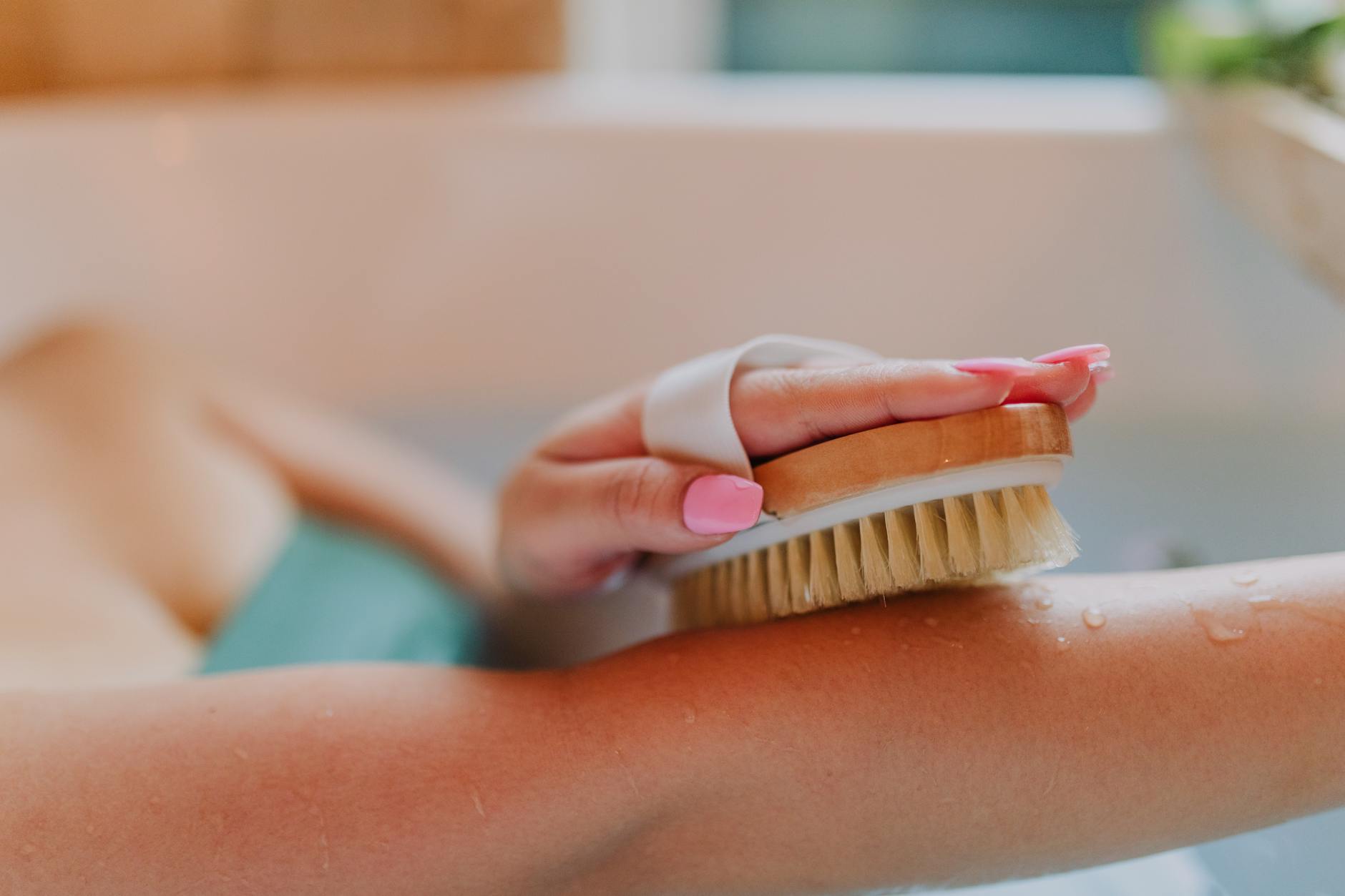
You can physically exfoliate at home starting with a warm shower or bath. This warmth will open up your pores and help the body release natural oils. It’s best to exfoliate in the morning as the skin repairs itself at night leaving a fresh layer of dead skin to be removed.
Whether taking a shower or bath allow the skin to be in contact with the water for 5-10 minutes before beginning the process. You can use a scrub, brush, washcloth, loofah, or exfoliating gloves during the process. Circular motions for 20-30 seconds work for each area. After rubbing your skin, wash it off with warm water.
Also, remember that the skin on your face and neck is more delicate than the rest of your body so be gentle.
For chemical exfoliation, please follow the instructions given on the product. You can also try a patch test on a small area of skin. For chemical peels, leaving the product on for longer than recommended can do more damage than good. For more on chemical exfoliation, click here.
Takeaway
Exfoliation is possible for everyone with plenty of DIY recipes and affordable tools out there to aid in the process. However, consult a professional beforehand if you have an underlying skin condition to see which method of exfoliation suits you best.
Exfoliation is an essential part of any skincare routine. All in all, not only will it result in more youthful, radiant skin but also has positive health benefits. Stay safe and indulge in your self-care.